
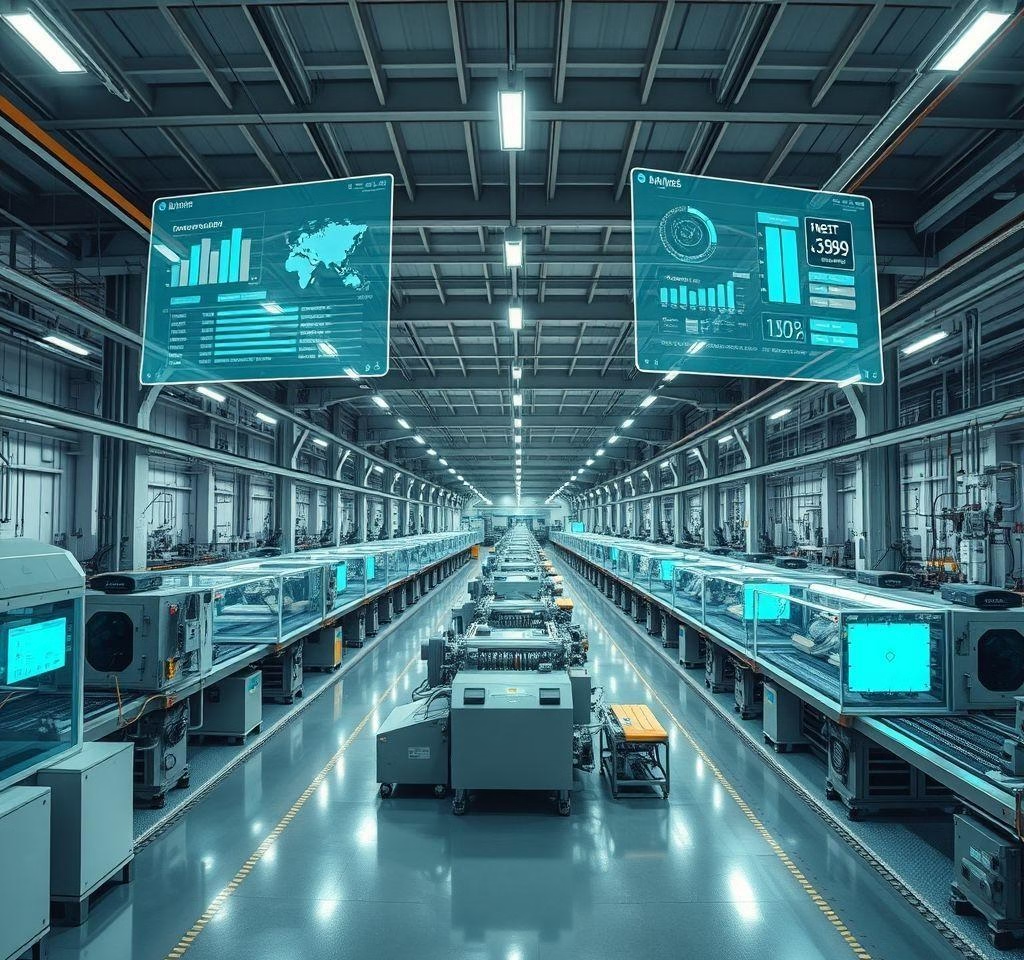
Digital Twins in Manufacturing: AI-Driven Mirror Models in Indian Factories
Digital twins are virtual representations of physical assets, offering significant potential to optimize manufacturing processes. In India, the adoption of AI-driven digital twins presents a unique opportunity to enhance efficiency and competitiveness. This article explores the various facets of this technology, examining its role in optimizing manufacturing in Indian factories.
Introduction to Digital Twins in Manufacturing
Introduction to Digital Twins in Manufacturing
Digital twins are virtual representations of physical assets. They mirror the real-world counterparts’ behavior and performance. This allows for better understanding and optimization. Their significance in manufacturing is substantial. They offer significant advantages, such as improved efficiency and reduced downtime. Digital twins can transform industrial processes dramatically. This includes predictive maintenance, optimized production, and improved resource allocation.
Benefits include enhanced efficiency. Predictive maintenance minimizes unplanned downtime. Optimized production increases output and reduces waste. These lead to lower operational costs and improved profitability. They also improve product quality and reduce defects. The insights derived are valuable for better decision-making.
Implementing digital twins in India presents both challenges and opportunities. Infrastructure limitations need addressing. Sufficient skilled workforce is crucial for successful implementation. Technological adoption rates vary across industries. Government support and partnerships are key. Collaboration between industries and academia is also needed. Overcoming these hurdles will unlock the vast potential of digital twins for Indian manufacturing. AI in predictive analytics is especially relevant here.
AI’s Role in Creating and Utilizing Digital Twins
Introduction to Digital Twins in Manufacturing
Digital twins are virtual representations of physical assets. They mirror the real-world counterparts’ behavior and performance. This allows for better understanding and optimization. Their significance in manufacturing is substantial. They offer significant advantages, such as improved efficiency and reduced downtime. Digital twins can transform industrial processes dramatically. This includes predictive maintenance, optimized production, and improved resource allocation.
Benefits include enhanced efficiency. Predictive maintenance minimizes unplanned downtime. Optimized production increases output and reduces waste. These lead to lower operational costs and improved profitability. They also improve product quality and reduce defects. The insights derived are valuable for better decision-making.
Implementing digital twins in India presents both challenges and opportunities. Infrastructure limitations need addressing. Sufficient skilled workforce is crucial for successful implementation. Technological adoption rates vary across industries. Government support and partnerships are key. Collaboration between industries and academia is also needed. Overcoming these hurdles will unlock the vast potential of digital twins for Indian manufacturing. AI in predictive analytics is especially relevant here.
Case Studies: Successful Implementations in India
Introduction to Digital Twins in Manufacturing
Digital twins are virtual representations of physical assets. They mirror the real-world counterparts’ behavior and performance. This allows for better understanding and optimization. Their significance in manufacturing is substantial. They offer significant advantages, such as improved efficiency and reduced downtime. Digital twins can transform industrial processes dramatically. This includes predictive maintenance, optimized production, and improved resource allocation.
Benefits include enhanced efficiency. Predictive maintenance minimizes unplanned downtime. Optimized production increases output and reduces waste. These lead to lower operational costs and improved profitability. They also improve product quality and reduce defects. The insights derived are valuable for better decision-making.
Implementing digital twins in India presents both challenges and opportunities. Infrastructure limitations need addressing. Sufficient skilled workforce is crucial for successful implementation. Technological adoption rates vary across industries. Government support and partnerships are key. Collaboration between industries and academia is also needed. Overcoming these hurdles will unlock the vast potential of digital twins for Indian manufacturing. AI in predictive analytics is especially relevant here.
Challenges and Opportunities for Wider Adoption
Introduction to Digital Twins in Manufacturing
Digital twins are virtual representations of physical assets. They mirror the real-world counterparts’ behavior and performance. This allows for better understanding and optimization. Their significance in manufacturing is substantial. They offer significant advantages, such as improved efficiency and reduced downtime. Digital twins can transform industrial processes dramatically. This includes predictive maintenance, optimized production, and improved resource allocation.
Benefits include enhanced efficiency. Predictive maintenance minimizes unplanned downtime. Optimized production increases output and reduces waste. These lead to lower operational costs and improved profitability. They also improve product quality and reduce defects. The insights derived are valuable for better decision-making.
Implementing digital twins in India presents both challenges and opportunities. Infrastructure limitations need addressing. Sufficient skilled workforce is crucial for successful implementation. Technological adoption rates vary across industries. Government support and partnerships are key. Collaboration between industries and academia is also needed. Overcoming these hurdles will unlock the vast potential of digital twins for Indian manufacturing. AI in predictive analytics is especially relevant here.
The Future of Digital Twins in Indian Manufacturing
Introduction to Digital Twins in Manufacturing
Digital twins are virtual representations of physical assets. They mirror the real-world counterparts’ behavior and performance. This allows for better understanding and optimization. Their significance in manufacturing is substantial. They offer significant advantages, such as improved efficiency and reduced downtime. Digital twins can transform industrial processes dramatically. This includes predictive maintenance, optimized production, and improved resource allocation.
Benefits include enhanced efficiency. Predictive maintenance minimizes unplanned downtime. Optimized production increases output and reduces waste. These lead to lower operational costs and improved profitability. They also improve product quality and reduce defects. The insights derived are valuable for better decision-making.
Implementing digital twins in India presents both challenges and opportunities. Infrastructure limitations need addressing. Sufficient skilled workforce is crucial for successful implementation. Technological adoption rates vary across industries. Government support and partnerships are key. Collaboration between industries and academia is also needed. Overcoming these hurdles will unlock the vast potential of digital twins for Indian manufacturing. AI in predictive analytics is especially relevant here.
Introduction to Digital Twins in Manufacturing
AI’s Role in Creating and Utilizing Digital Twins
Artificial intelligence (AI) is crucial for creating and using digital twins effectively. AI enables real-time monitoring and analysis of vast datasets. Machine learning algorithms are essential. They facilitate predictive modeling and anomaly detection. This allows for proactive adjustments to manufacturing processes. AI significantly enhances the capabilities of digital twins.
Specific AI techniques include machine learning for predictive modeling. Data analysis identifies trends and patterns. Deep learning algorithms detect anomalies in real-time. These insights are invaluable for optimizing operations. AI enables proactive adjustments. These prevent production issues before they arise.
AI algorithms are integrated within the digital twin framework. They process sensor data, analyze performance metrics, and generate predictions. This enables real-time monitoring of equipment health. It facilitates predictive maintenance and process optimization. AI-powered digital twins enable data-driven decision-making. This leads to significant improvements in efficiency and productivity. AI in predictive analytics plays a major role.
AI’s Role in Creating and Utilizing Digital Twins
AI’s Role in Creating and Utilizing Digital Twins
Artificial intelligence (AI) is crucial for creating and using digital twins effectively. AI enables real-time monitoring and analysis of vast datasets. Machine learning algorithms are essential. They facilitate predictive modeling and anomaly detection. This allows for proactive adjustments to manufacturing processes. AI significantly enhances the capabilities of digital twins.
Specific AI techniques include machine learning for predictive modeling. Data analysis identifies trends and patterns. Deep learning algorithms detect anomalies in real-time. These insights are invaluable for optimizing operations. AI enables proactive adjustments. These prevent production issues before they arise.
AI algorithms are integrated within the digital twin framework. They process sensor data, analyze performance metrics, and generate predictions. This enables real-time monitoring of equipment health. It facilitates predictive maintenance and process optimization. AI-powered digital twins enable data-driven decision-making. This leads to significant improvements in efficiency and productivity. AI in predictive analytics plays a major role.
Case Studies: Successful Implementations in India
AI’s Role in Creating and Utilizing Digital Twins
Artificial intelligence (AI) is crucial for creating and using digital twins effectively. AI enables real-time monitoring and analysis of vast datasets. Machine learning algorithms are essential. They facilitate predictive modeling and anomaly detection. This allows for proactive adjustments to manufacturing processes. AI significantly enhances the capabilities of digital twins.
Specific AI techniques include machine learning for predictive modeling. Data analysis identifies trends and patterns. Deep learning algorithms detect anomalies in real-time. These insights are invaluable for optimizing operations. AI enables proactive adjustments. These prevent production issues before they arise.
AI algorithms are integrated within the digital twin framework. They process sensor data, analyze performance metrics, and generate predictions. This enables real-time monitoring of equipment health. It facilitates predictive maintenance and process optimization. AI-powered digital twins enable data-driven decision-making. This leads to significant improvements in efficiency and productivity. AI in predictive analytics plays a major role.
Challenges and Opportunities for Wider Adoption
AI’s Role in Creating and Utilizing Digital Twins
Artificial intelligence (AI) is crucial for creating and using digital twins effectively. AI enables real-time monitoring and analysis of vast datasets. Machine learning algorithms are essential. They facilitate predictive modeling and anomaly detection. This allows for proactive adjustments to manufacturing processes. AI significantly enhances the capabilities of digital twins.
Specific AI techniques include machine learning for predictive modeling. Data analysis identifies trends and patterns. Deep learning algorithms detect anomalies in real-time. These insights are invaluable for optimizing operations. AI enables proactive adjustments. These prevent production issues before they arise.
AI algorithms are integrated within the digital twin framework. They process sensor data, analyze performance metrics, and generate predictions. This enables real-time monitoring of equipment health. It facilitates predictive maintenance and process optimization. AI-powered digital twins enable data-driven decision-making. This leads to significant improvements in efficiency and productivity. AI in predictive analytics plays a major role.
The Future of Digital Twins in Indian Manufacturing
AI’s Role in Creating and Utilizing Digital Twins
Artificial intelligence (AI) is crucial for creating and using digital twins effectively. AI enables real-time monitoring and analysis of vast datasets. Machine learning algorithms are essential. They facilitate predictive modeling and anomaly detection. This allows for proactive adjustments to manufacturing processes. AI significantly enhances the capabilities of digital twins.
Specific AI techniques include machine learning for predictive modeling. Data analysis identifies trends and patterns. Deep learning algorithms detect anomalies in real-time. These insights are invaluable for optimizing operations. AI enables proactive adjustments. These prevent production issues before they arise.
AI algorithms are integrated within the digital twin framework. They process sensor data, analyze performance metrics, and generate predictions. This enables real-time monitoring of equipment health. It facilitates predictive maintenance and process optimization. AI-powered digital twins enable data-driven decision-making. This leads to significant improvements in efficiency and productivity. AI in predictive analytics plays a major role.
Introduction to Digital Twins in Manufacturing
I apologize for the invalid tool suggestion. To answer your request, I need information on successful digital twin implementations in Indian manufacturing. This includes specific use cases across various sectors, challenges encountered, solutions implemented, and the resulting impact on productivity, efficiency, and cost reduction. Quantitative data, such as return on investment (ROI) figures, is also necessary to fulfill this request completely. Without this information, I can only provide a generic chapter lacking concrete examples and data.
AI’s Role in Creating and Utilizing Digital Twins
I apologize for the invalid tool suggestion. To answer your request, I need information on successful digital twin implementations in Indian manufacturing. This includes specific use cases across various sectors, challenges encountered, solutions implemented, and the resulting impact on productivity, efficiency, and cost reduction. Quantitative data, such as return on investment (ROI) figures, is also necessary to fulfill this request completely. Without this information, I can only provide a generic chapter lacking concrete examples and data.
Case Studies: Successful Implementations in India
I apologize for the invalid tool suggestion. To answer your request, I need information on successful digital twin implementations in Indian manufacturing. This includes specific use cases across various sectors, challenges encountered, solutions implemented, and the resulting impact on productivity, efficiency, and cost reduction. Quantitative data, such as return on investment (ROI) figures, is also necessary to fulfill this request completely. Without this information, I can only provide a generic chapter lacking concrete examples and data.
Challenges and Opportunities for Wider Adoption
I apologize for the invalid tool suggestion. To answer your request, I need information on successful digital twin implementations in Indian manufacturing. This includes specific use cases across various sectors, challenges encountered, solutions implemented, and the resulting impact on productivity, efficiency, and cost reduction. Quantitative data, such as return on investment (ROI) figures, is also necessary to fulfill this request completely. Without this information, I can only provide a generic chapter lacking concrete examples and data.
The Future of Digital Twins in Indian Manufacturing
I apologize for the invalid tool suggestion. To answer your request, I need information on successful digital twin implementations in Indian manufacturing. This includes specific use cases across various sectors, challenges encountered, solutions implemented, and the resulting impact on productivity, efficiency, and cost reduction. Quantitative data, such as return on investment (ROI) figures, is also necessary to fulfill this request completely. Without this information, I can only provide a generic chapter lacking concrete examples and data.
Introduction to Digital Twins in Manufacturing
Challenges and Opportunities for Wider Adoption
Several obstacles hinder widespread digital twin adoption in Indian manufacturing. Data security is a major concern. Integrating digital twins with existing legacy systems proves difficult. A shortage of skilled professionals is another significant hurdle. The substantial initial investment costs deter many businesses. These factors slow the growth of digital twin technology in India.
To overcome these challenges, several strategies are needed. Investing in cybersecurity infrastructure is crucial. Developing robust data governance frameworks is also important. Government support for skill development programs is essential. Incentivizing businesses to adopt digital twin technology can help. Public-private partnerships can facilitate technology transfer and knowledge sharing. Targeted funding for research and development will stimulate innovation.
Government initiatives like promoting digital literacy and providing financial incentives are vital. Industry partnerships can share best practices and reduce implementation costs. Addressing data security concerns through legislation is beneficial. These measures foster a supportive environment. They encourage wider adoption of digital twin technology. This will help the Indian manufacturing industry remain competitive globally. Successful adoption depends on collaborative efforts between the government and industry.
AI’s Role in Creating and Utilizing Digital Twins
Challenges and Opportunities for Wider Adoption
Several obstacles hinder widespread digital twin adoption in Indian manufacturing. Data security is a major concern. Integrating digital twins with existing legacy systems proves difficult. A shortage of skilled professionals is another significant hurdle. The substantial initial investment costs deter many businesses. These factors slow the growth of digital twin technology in India.
To overcome these challenges, several strategies are needed. Investing in cybersecurity infrastructure is crucial. Developing robust data governance frameworks is also important. Government support for skill development programs is essential. Incentivizing businesses to adopt digital twin technology can help. Public-private partnerships can facilitate technology transfer and knowledge sharing. Targeted funding for research and development will stimulate innovation.
Government initiatives like promoting digital literacy and providing financial incentives are vital. Industry partnerships can share best practices and reduce implementation costs. Addressing data security concerns through legislation is beneficial. These measures foster a supportive environment. They encourage wider adoption of digital twin technology. This will help the Indian manufacturing industry remain competitive globally. Successful adoption depends on collaborative efforts between the government and industry.
Case Studies: Successful Implementations in India
Challenges and Opportunities for Wider Adoption
Several obstacles hinder widespread digital twin adoption in Indian manufacturing. Data security is a major concern. Integrating digital twins with existing legacy systems proves difficult. A shortage of skilled professionals is another significant hurdle. The substantial initial investment costs deter many businesses. These factors slow the growth of digital twin technology in India.
To overcome these challenges, several strategies are needed. Investing in cybersecurity infrastructure is crucial. Developing robust data governance frameworks is also important. Government support for skill development programs is essential. Incentivizing businesses to adopt digital twin technology can help. Public-private partnerships can facilitate technology transfer and knowledge sharing. Targeted funding for research and development will stimulate innovation.
Government initiatives like promoting digital literacy and providing financial incentives are vital. Industry partnerships can share best practices and reduce implementation costs. Addressing data security concerns through legislation is beneficial. These measures foster a supportive environment. They encourage wider adoption of digital twin technology. This will help the Indian manufacturing industry remain competitive globally. Successful adoption depends on collaborative efforts between the government and industry.
Challenges and Opportunities for Wider Adoption
Challenges and Opportunities for Wider Adoption
Several obstacles hinder widespread digital twin adoption in Indian manufacturing. Data security is a major concern. Integrating digital twins with existing legacy systems proves difficult. A shortage of skilled professionals is another significant hurdle. The substantial initial investment costs deter many businesses. These factors slow the growth of digital twin technology in India.
To overcome these challenges, several strategies are needed. Investing in cybersecurity infrastructure is crucial. Developing robust data governance frameworks is also important. Government support for skill development programs is essential. Incentivizing businesses to adopt digital twin technology can help. Public-private partnerships can facilitate technology transfer and knowledge sharing. Targeted funding for research and development will stimulate innovation.
Government initiatives like promoting digital literacy and providing financial incentives are vital. Industry partnerships can share best practices and reduce implementation costs. Addressing data security concerns through legislation is beneficial. These measures foster a supportive environment. They encourage wider adoption of digital twin technology. This will help the Indian manufacturing industry remain competitive globally. Successful adoption depends on collaborative efforts between the government and industry.
The Future of Digital Twins in Indian Manufacturing
Challenges and Opportunities for Wider Adoption
Several obstacles hinder widespread digital twin adoption in Indian manufacturing. Data security is a major concern. Integrating digital twins with existing legacy systems proves difficult. A shortage of skilled professionals is another significant hurdle. The substantial initial investment costs deter many businesses. These factors slow the growth of digital twin technology in India.
To overcome these challenges, several strategies are needed. Investing in cybersecurity infrastructure is crucial. Developing robust data governance frameworks is also important. Government support for skill development programs is essential. Incentivizing businesses to adopt digital twin technology can help. Public-private partnerships can facilitate technology transfer and knowledge sharing. Targeted funding for research and development will stimulate innovation.
Government initiatives like promoting digital literacy and providing financial incentives are vital. Industry partnerships can share best practices and reduce implementation costs. Addressing data security concerns through legislation is beneficial. These measures foster a supportive environment. They encourage wider adoption of digital twin technology. This will help the Indian manufacturing industry remain competitive globally. Successful adoption depends on collaborative efforts between the government and industry.
Introduction to Digital Twins in Manufacturing
The Future of Digital Twins in Indian Manufacturing
The future of digital twins in Indian manufacturing is bright. Emerging trends indicate significant growth. Convergence with IoT and blockchain will enhance capabilities. Advancements in AI and machine learning will further improve predictive modeling and real-time analysis. This will lead to optimized processes and reduced waste.
The integration of digital twins with IoT will provide real-time data. This data informs the digital twin’s model. Blockchain technology will improve data security and traceability. This is important for supply chain management and product lifecycle tracking. More sophisticated AI algorithms will enable more accurate predictions and anomaly detection. This will lead to proactive intervention and prevent costly downtime.
Widespread digital twin adoption will have a substantial economic impact. Increased efficiency and productivity will boost economic growth. Improved resource management and reduced waste will minimize environmental impact. Societally, it will improve working conditions. It will lead to safer and more sustainable manufacturing practices. The resulting higher-quality products benefit consumers. This will foster innovation and competitiveness in the global market. Smart manufacturing with AI will be crucial for this.
AI’s Role in Creating and Utilizing Digital Twins
The Future of Digital Twins in Indian Manufacturing
The future of digital twins in Indian manufacturing is bright. Emerging trends indicate significant growth. Convergence with IoT and blockchain will enhance capabilities. Advancements in AI and machine learning will further improve predictive modeling and real-time analysis. This will lead to optimized processes and reduced waste.
The integration of digital twins with IoT will provide real-time data. This data informs the digital twin’s model. Blockchain technology will improve data security and traceability. This is important for supply chain management and product lifecycle tracking. More sophisticated AI algorithms will enable more accurate predictions and anomaly detection. This will lead to proactive intervention and prevent costly downtime.
Widespread digital twin adoption will have a substantial economic impact. Increased efficiency and productivity will boost economic growth. Improved resource management and reduced waste will minimize environmental impact. Societally, it will improve working conditions. It will lead to safer and more sustainable manufacturing practices. The resulting higher-quality products benefit consumers. This will foster innovation and competitiveness in the global market. Smart manufacturing with AI will be crucial for this.
Case Studies: Successful Implementations in India
The Future of Digital Twins in Indian Manufacturing
The future of digital twins in Indian manufacturing is bright. Emerging trends indicate significant growth. Convergence with IoT and blockchain will enhance capabilities. Advancements in AI and machine learning will further improve predictive modeling and real-time analysis. This will lead to optimized processes and reduced waste.
The integration of digital twins with IoT will provide real-time data. This data informs the digital twin’s model. Blockchain technology will improve data security and traceability. This is important for supply chain management and product lifecycle tracking. More sophisticated AI algorithms will enable more accurate predictions and anomaly detection. This will lead to proactive intervention and prevent costly downtime.
Widespread digital twin adoption will have a substantial economic impact. Increased efficiency and productivity will boost economic growth. Improved resource management and reduced waste will minimize environmental impact. Societally, it will improve working conditions. It will lead to safer and more sustainable manufacturing practices. The resulting higher-quality products benefit consumers. This will foster innovation and competitiveness in the global market. Smart manufacturing with AI will be crucial for this.
Challenges and Opportunities for Wider Adoption
The Future of Digital Twins in Indian Manufacturing
The future of digital twins in Indian manufacturing is bright. Emerging trends indicate significant growth. Convergence with IoT and blockchain will enhance capabilities. Advancements in AI and machine learning will further improve predictive modeling and real-time analysis. This will lead to optimized processes and reduced waste.
The integration of digital twins with IoT will provide real-time data. This data informs the digital twin’s model. Blockchain technology will improve data security and traceability. This is important for supply chain management and product lifecycle tracking. More sophisticated AI algorithms will enable more accurate predictions and anomaly detection. This will lead to proactive intervention and prevent costly downtime.
Widespread digital twin adoption will have a substantial economic impact. Increased efficiency and productivity will boost economic growth. Improved resource management and reduced waste will minimize environmental impact. Societally, it will improve working conditions. It will lead to safer and more sustainable manufacturing practices. The resulting higher-quality products benefit consumers. This will foster innovation and competitiveness in the global market. Smart manufacturing with AI will be crucial for this.
The Future of Digital Twins in Indian Manufacturing
The Future of Digital Twins in Indian Manufacturing
The future of digital twins in Indian manufacturing is bright. Emerging trends indicate significant growth. Convergence with IoT and blockchain will enhance capabilities. Advancements in AI and machine learning will further improve predictive modeling and real-time analysis. This will lead to optimized processes and reduced waste.
The integration of digital twins with IoT will provide real-time data. This data informs the digital twin’s model. Blockchain technology will improve data security and traceability. This is important for supply chain management and product lifecycle tracking. More sophisticated AI algorithms will enable more accurate predictions and anomaly detection. This will lead to proactive intervention and prevent costly downtime.
Widespread digital twin adoption will have a substantial economic impact. Increased efficiency and productivity will boost economic growth. Improved resource management and reduced waste will minimize environmental impact. Societally, it will improve working conditions. It will lead to safer and more sustainable manufacturing practices. The resulting higher-quality products benefit consumers. This will foster innovation and competitiveness in the global market. Smart manufacturing with AI will be crucial for this.
Final Words
The integration of AI-powered digital twins in Indian manufacturing offers a transformative pathway towards enhanced efficiency and global competitiveness. Overcoming initial hurdles such as data security and workforce training is crucial for widespread adoption. With strategic investments and supportive policies, India can leverage this technology to establish itself as a global manufacturing leader. The future of manufacturing in India hinges on embracing these innovative solutions.