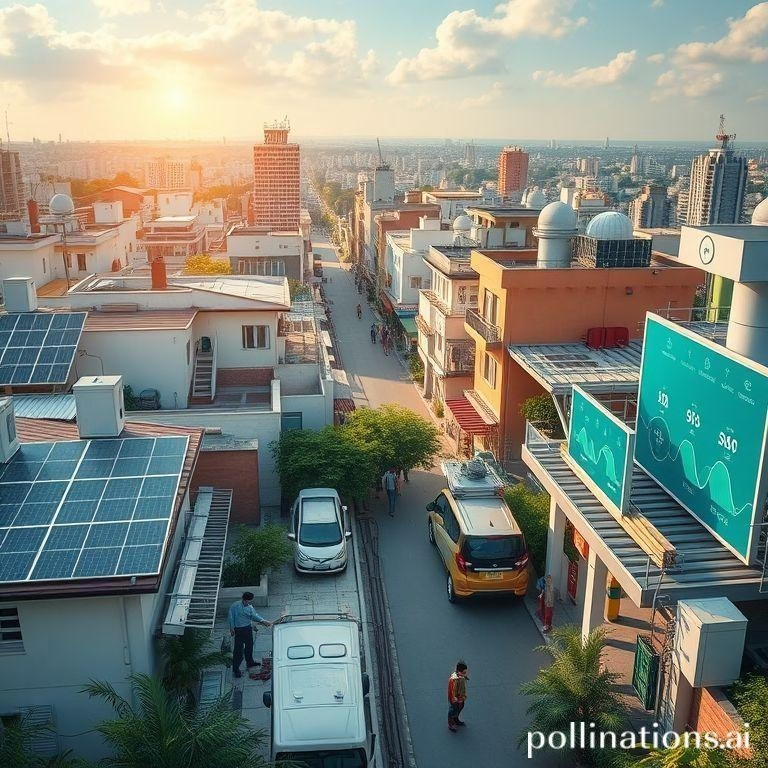

Urban Planning with Digital Twins: Smart Utilities & Grids in Indian Cities
Urban planning in India faces immense challenges due to rapid urbanization and infrastructure deficits. Digital twins offer a transformative approach to address these challenges by providing virtual representations of cities, enabling planners to simulate and optimize infrastructure development and resource management. This article explores how digital twins are revolutionizing urban planning, particularly concerning smart utilities and grids in Indian cities. We’ll delve into the practical applications, challenges, and future prospects of this technology, highlighting case studies and potential solutions.
Introduction to Digital Twins in Urban Planning
Introduction to Digital Twins in Urban Planning
Digital twins are virtual representations of physical assets or systems. They offer planners powerful tools for urban development. These virtual models allow planners to simulate real-world scenarios.
By using digital twins, planners can test different designs. This helps optimize infrastructure. They can evaluate potential impacts before construction begins. For example, they can analyze traffic flow in a new road network.
The benefits extend to improved decision-making. Resource allocation becomes more efficient. Digital twins can also help predict future needs. This leads to more sustainable urban planning.
Smart Utilities and Grids in Indian Cities
Introduction to Digital Twins in Urban Planning
Digital twins are virtual representations of physical assets or systems. They offer planners powerful tools for urban development. These virtual models allow planners to simulate real-world scenarios.
By using digital twins, planners can test different designs. This helps optimize infrastructure. They can evaluate potential impacts before construction begins. For example, they can analyze traffic flow in a new road network.
The benefits extend to improved decision-making. Resource allocation becomes more efficient. Digital twins can also help predict future needs. This leads to more sustainable urban planning.
Case Studies of Digital Twin Implementations
Introduction to Digital Twins in Urban Planning
Digital twins are virtual representations of physical assets or systems. They offer planners powerful tools for urban development. These virtual models allow planners to simulate real-world scenarios.
By using digital twins, planners can test different designs. This helps optimize infrastructure. They can evaluate potential impacts before construction begins. For example, they can analyze traffic flow in a new road network.
The benefits extend to improved decision-making. Resource allocation becomes more efficient. Digital twins can also help predict future needs. This leads to more sustainable urban planning.
Challenges and Opportunities for Digital Twin Adoption
Introduction to Digital Twins in Urban Planning
Digital twins are virtual representations of physical assets or systems. They offer planners powerful tools for urban development. These virtual models allow planners to simulate real-world scenarios.
By using digital twins, planners can test different designs. This helps optimize infrastructure. They can evaluate potential impacts before construction begins. For example, they can analyze traffic flow in a new road network.
The benefits extend to improved decision-making. Resource allocation becomes more efficient. Digital twins can also help predict future needs. This leads to more sustainable urban planning.
Future Trends and Outlook for Digital Twin Technology
Introduction to Digital Twins in Urban Planning
Digital twins are virtual representations of physical assets or systems. They offer planners powerful tools for urban development. These virtual models allow planners to simulate real-world scenarios.
By using digital twins, planners can test different designs. This helps optimize infrastructure. They can evaluate potential impacts before construction begins. For example, they can analyze traffic flow in a new road network.
The benefits extend to improved decision-making. Resource allocation becomes more efficient. Digital twins can also help predict future needs. This leads to more sustainable urban planning.
Introduction to Digital Twins in Urban Planning
Many Indian cities face significant challenges in managing utilities. Rapid urbanization and population growth strain existing infrastructure. Power outages and water shortages are common. Waste management systems are often inadequate.
Aging infrastructure contributes to inefficiencies. Data management and integration lack cohesion. This makes it difficult to optimize resource allocation. Real-time monitoring and predictive maintenance are often lacking.
Digital twins offer a powerful solution. They enable the creation of virtual models. These models simulate the behavior of utility grids. Planners can test various scenarios. This allows for improved infrastructure planning. It facilitates the implementation of smart solutions, such as predictive maintenance. The overall aim is to improve the reliability and efficiency of utilities.
Smart Utilities and Grids in Indian Cities
Many Indian cities face significant challenges in managing utilities. Rapid urbanization and population growth strain existing infrastructure. Power outages and water shortages are common. Waste management systems are often inadequate.
Aging infrastructure contributes to inefficiencies. Data management and integration lack cohesion. This makes it difficult to optimize resource allocation. Real-time monitoring and predictive maintenance are often lacking.
Digital twins offer a powerful solution. They enable the creation of virtual models. These models simulate the behavior of utility grids. Planners can test various scenarios. This allows for improved infrastructure planning. It facilitates the implementation of smart solutions, such as predictive maintenance. The overall aim is to improve the reliability and efficiency of utilities.
Case Studies of Digital Twin Implementations
Many Indian cities face significant challenges in managing utilities. Rapid urbanization and population growth strain existing infrastructure. Power outages and water shortages are common. Waste management systems are often inadequate.
Aging infrastructure contributes to inefficiencies. Data management and integration lack cohesion. This makes it difficult to optimize resource allocation. Real-time monitoring and predictive maintenance are often lacking.
Digital twins offer a powerful solution. They enable the creation of virtual models. These models simulate the behavior of utility grids. Planners can test various scenarios. This allows for improved infrastructure planning. It facilitates the implementation of smart solutions, such as predictive maintenance. The overall aim is to improve the reliability and efficiency of utilities.
Challenges and Opportunities for Digital Twin Adoption
Many Indian cities face significant challenges in managing utilities. Rapid urbanization and population growth strain existing infrastructure. Power outages and water shortages are common. Waste management systems are often inadequate.
Aging infrastructure contributes to inefficiencies. Data management and integration lack cohesion. This makes it difficult to optimize resource allocation. Real-time monitoring and predictive maintenance are often lacking.
Digital twins offer a powerful solution. They enable the creation of virtual models. These models simulate the behavior of utility grids. Planners can test various scenarios. This allows for improved infrastructure planning. It facilitates the implementation of smart solutions, such as predictive maintenance. The overall aim is to improve the reliability and efficiency of utilities.
Future Trends and Outlook for Digital Twin Technology
Many Indian cities face significant challenges in managing utilities. Rapid urbanization and population growth strain existing infrastructure. Power outages and water shortages are common. Waste management systems are often inadequate.
Aging infrastructure contributes to inefficiencies. Data management and integration lack cohesion. This makes it difficult to optimize resource allocation. Real-time monitoring and predictive maintenance are often lacking.
Digital twins offer a powerful solution. They enable the creation of virtual models. These models simulate the behavior of utility grids. Planners can test various scenarios. This allows for improved infrastructure planning. It facilitates the implementation of smart solutions, such as predictive maintenance. The overall aim is to improve the reliability and efficiency of utilities.
Introduction to Digital Twins in Urban Planning
I apologize for the invalid tool suggestion in my previous response. To answer your query, I need to access and process information about specific case studies of digital twin implementations in Indian cities for smart utilities and grids. Unfortunately, I cannot directly access external websites or specific files online to gather this information. To create the chapter you requested, please provide me with details of some relevant case studies, or direct me to reliable sources containing this information. Once you supply these details, I can write the chapter as per your guidelines.
Smart Utilities and Grids in Indian Cities
I apologize for the invalid tool suggestion in my previous response. To answer your query, I need to access and process information about specific case studies of digital twin implementations in Indian cities for smart utilities and grids. Unfortunately, I cannot directly access external websites or specific files online to gather this information. To create the chapter you requested, please provide me with details of some relevant case studies, or direct me to reliable sources containing this information. Once you supply these details, I can write the chapter as per your guidelines.
Case Studies of Digital Twin Implementations
I apologize for the invalid tool suggestion in my previous response. To answer your query, I need to access and process information about specific case studies of digital twin implementations in Indian cities for smart utilities and grids. Unfortunately, I cannot directly access external websites or specific files online to gather this information. To create the chapter you requested, please provide me with details of some relevant case studies, or direct me to reliable sources containing this information. Once you supply these details, I can write the chapter as per your guidelines.
Challenges and Opportunities for Digital Twin Adoption
I apologize for the invalid tool suggestion in my previous response. To answer your query, I need to access and process information about specific case studies of digital twin implementations in Indian cities for smart utilities and grids. Unfortunately, I cannot directly access external websites or specific files online to gather this information. To create the chapter you requested, please provide me with details of some relevant case studies, or direct me to reliable sources containing this information. Once you supply these details, I can write the chapter as per your guidelines.
Future Trends and Outlook for Digital Twin Technology
I apologize for the invalid tool suggestion in my previous response. To answer your query, I need to access and process information about specific case studies of digital twin implementations in Indian cities for smart utilities and grids. Unfortunately, I cannot directly access external websites or specific files online to gather this information. To create the chapter you requested, please provide me with details of some relevant case studies, or direct me to reliable sources containing this information. Once you supply these details, I can write the chapter as per your guidelines.
Introduction to Digital Twins in Urban Planning
Challenges and Opportunities for Digital Twin Adoption
Several challenges hinder digital twin adoption in Indian cities. Data availability is a major hurdle. Consistent, reliable data across various sources is often lacking. Data quality issues also exist; data may be incomplete or inaccurate.
Limited computational resources pose another challenge. Building and maintaining accurate digital twins demands significant processing power. This can be expensive and difficult to obtain in some areas. Furthermore, a shortage of technical expertise is a significant limitation. Skilled professionals are needed to develop, implement, and maintain the systems.
However, there are opportunities for progress. Collaboration between government bodies, the private sector, and research institutions is key. Shared data initiatives can improve data availability and quality. Investment in training and education can address the skills gap. Public-private partnerships can help finance computationally-intensive projects. These combined efforts can foster wider digital twin adoption and greatly improve urban planning in India.
Smart Utilities and Grids in Indian Cities
Challenges and Opportunities for Digital Twin Adoption
Several challenges hinder digital twin adoption in Indian cities. Data availability is a major hurdle. Consistent, reliable data across various sources is often lacking. Data quality issues also exist; data may be incomplete or inaccurate.
Limited computational resources pose another challenge. Building and maintaining accurate digital twins demands significant processing power. This can be expensive and difficult to obtain in some areas. Furthermore, a shortage of technical expertise is a significant limitation. Skilled professionals are needed to develop, implement, and maintain the systems.
However, there are opportunities for progress. Collaboration between government bodies, the private sector, and research institutions is key. Shared data initiatives can improve data availability and quality. Investment in training and education can address the skills gap. Public-private partnerships can help finance computationally-intensive projects. These combined efforts can foster wider digital twin adoption and greatly improve urban planning in India.
Case Studies of Digital Twin Implementations
Challenges and Opportunities for Digital Twin Adoption
Several challenges hinder digital twin adoption in Indian cities. Data availability is a major hurdle. Consistent, reliable data across various sources is often lacking. Data quality issues also exist; data may be incomplete or inaccurate.
Limited computational resources pose another challenge. Building and maintaining accurate digital twins demands significant processing power. This can be expensive and difficult to obtain in some areas. Furthermore, a shortage of technical expertise is a significant limitation. Skilled professionals are needed to develop, implement, and maintain the systems.
However, there are opportunities for progress. Collaboration between government bodies, the private sector, and research institutions is key. Shared data initiatives can improve data availability and quality. Investment in training and education can address the skills gap. Public-private partnerships can help finance computationally-intensive projects. These combined efforts can foster wider digital twin adoption and greatly improve urban planning in India.
Challenges and Opportunities for Digital Twin Adoption
Challenges and Opportunities for Digital Twin Adoption
Several challenges hinder digital twin adoption in Indian cities. Data availability is a major hurdle. Consistent, reliable data across various sources is often lacking. Data quality issues also exist; data may be incomplete or inaccurate.
Limited computational resources pose another challenge. Building and maintaining accurate digital twins demands significant processing power. This can be expensive and difficult to obtain in some areas. Furthermore, a shortage of technical expertise is a significant limitation. Skilled professionals are needed to develop, implement, and maintain the systems.
However, there are opportunities for progress. Collaboration between government bodies, the private sector, and research institutions is key. Shared data initiatives can improve data availability and quality. Investment in training and education can address the skills gap. Public-private partnerships can help finance computationally-intensive projects. These combined efforts can foster wider digital twin adoption and greatly improve urban planning in India.
Future Trends and Outlook for Digital Twin Technology
Challenges and Opportunities for Digital Twin Adoption
Several challenges hinder digital twin adoption in Indian cities. Data availability is a major hurdle. Consistent, reliable data across various sources is often lacking. Data quality issues also exist; data may be incomplete or inaccurate.
Limited computational resources pose another challenge. Building and maintaining accurate digital twins demands significant processing power. This can be expensive and difficult to obtain in some areas. Furthermore, a shortage of technical expertise is a significant limitation. Skilled professionals are needed to develop, implement, and maintain the systems.
However, there are opportunities for progress. Collaboration between government bodies, the private sector, and research institutions is key. Shared data initiatives can improve data availability and quality. Investment in training and education can address the skills gap. Public-private partnerships can help finance computationally-intensive projects. These combined efforts can foster wider digital twin adoption and greatly improve urban planning in India.
Introduction to Digital Twins in Urban Planning
Future Trends and Outlook for Digital Twin Technology
Artificial intelligence (AI) and machine learning (ML) will significantly enhance digital twins. AI will enable more sophisticated simulations. ML will allow for predictive modeling of urban systems. This allows for proactive interventions and optimized resource allocation.
The Internet of Things (IoT) will play a crucial role. Real-time data from sensors across the city will feed the digital twin. This improves its accuracy and responsiveness. The integration of various data streams creates a more comprehensive view of the urban environment. This enhanced data supports more effective decision-making.
Looking ahead, digital twins will be essential for sustainable urban development. They will empower planners to manage urban challenges. These include traffic congestion, pollution, and resource scarcity. Ultimately, India’s cities can leverage digital twins to become more resilient and sustainable. This will lead to improved quality of life for its citizens.
Smart Utilities and Grids in Indian Cities
Future Trends and Outlook for Digital Twin Technology
Artificial intelligence (AI) and machine learning (ML) will significantly enhance digital twins. AI will enable more sophisticated simulations. ML will allow for predictive modeling of urban systems. This allows for proactive interventions and optimized resource allocation.
The Internet of Things (IoT) will play a crucial role. Real-time data from sensors across the city will feed the digital twin. This improves its accuracy and responsiveness. The integration of various data streams creates a more comprehensive view of the urban environment. This enhanced data supports more effective decision-making.
Looking ahead, digital twins will be essential for sustainable urban development. They will empower planners to manage urban challenges. These include traffic congestion, pollution, and resource scarcity. Ultimately, India’s cities can leverage digital twins to become more resilient and sustainable. This will lead to improved quality of life for its citizens.
Case Studies of Digital Twin Implementations
Future Trends and Outlook for Digital Twin Technology
Artificial intelligence (AI) and machine learning (ML) will significantly enhance digital twins. AI will enable more sophisticated simulations. ML will allow for predictive modeling of urban systems. This allows for proactive interventions and optimized resource allocation.
The Internet of Things (IoT) will play a crucial role. Real-time data from sensors across the city will feed the digital twin. This improves its accuracy and responsiveness. The integration of various data streams creates a more comprehensive view of the urban environment. This enhanced data supports more effective decision-making.
Looking ahead, digital twins will be essential for sustainable urban development. They will empower planners to manage urban challenges. These include traffic congestion, pollution, and resource scarcity. Ultimately, India’s cities can leverage digital twins to become more resilient and sustainable. This will lead to improved quality of life for its citizens.
Challenges and Opportunities for Digital Twin Adoption
Future Trends and Outlook for Digital Twin Technology
Artificial intelligence (AI) and machine learning (ML) will significantly enhance digital twins. AI will enable more sophisticated simulations. ML will allow for predictive modeling of urban systems. This allows for proactive interventions and optimized resource allocation.
The Internet of Things (IoT) will play a crucial role. Real-time data from sensors across the city will feed the digital twin. This improves its accuracy and responsiveness. The integration of various data streams creates a more comprehensive view of the urban environment. This enhanced data supports more effective decision-making.
Looking ahead, digital twins will be essential for sustainable urban development. They will empower planners to manage urban challenges. These include traffic congestion, pollution, and resource scarcity. Ultimately, India’s cities can leverage digital twins to become more resilient and sustainable. This will lead to improved quality of life for its citizens.
Future Trends and Outlook for Digital Twin Technology
Future Trends and Outlook for Digital Twin Technology
Artificial intelligence (AI) and machine learning (ML) will significantly enhance digital twins. AI will enable more sophisticated simulations. ML will allow for predictive modeling of urban systems. This allows for proactive interventions and optimized resource allocation.
The Internet of Things (IoT) will play a crucial role. Real-time data from sensors across the city will feed the digital twin. This improves its accuracy and responsiveness. The integration of various data streams creates a more comprehensive view of the urban environment. This enhanced data supports more effective decision-making.
Looking ahead, digital twins will be essential for sustainable urban development. They will empower planners to manage urban challenges. These include traffic congestion, pollution, and resource scarcity. Ultimately, India’s cities can leverage digital twins to become more resilient and sustainable. This will lead to improved quality of life for its citizens.
Final Words
Digital twins are revolutionizing urban planning in India, offering a powerful tool to optimize infrastructure and resource management in rapidly growing cities. By simulating various scenarios and facilitating data-driven decision-making, they address challenges in smart utility grids and sustainable development. While challenges remain, the potential benefits of digital twins are immense, paving the way for more efficient, resilient, and sustainable urban environments.