AI & IoT-Powered
Life Sciences Innovation
Research, Manufacturing & Compliance — Accelerated
We help pharmaceutical companies, biotech firms, research labs, and medical device manufacturers accelerate innovation through AI-driven insights and IoT-enabled automation — enabling faster discovery, improved quality, and regulatory-ready operations.
Complexity, Compliance & Time-to-Market Pressure
High R&D costs, strict regulations, and operational risk demand that life sciences organizations move from manual monitoring and disconnected systems to predictive, intelligent automation.
Strict Regulatory Compliance
FDA, GMP, and EMA regulations demand precise traceability, audit readiness, and zero-tolerance quality control.
Time-to-Market Pressure
Lengthy R&D cycles, delayed clinical trials, and fragmented data pipelines slow innovation and competitive advantage.
Cold Chain Integrity
Temperature-sensitive products are at risk during storage and distribution, leading to costly spoilage and compliance failures.
Disconnected Data Silos
Fragmented LIMS, MES, and ERP systems prevent unified visibility across labs, manufacturing, and supply chains.
Equipment Failures & Downtime
Unplanned manufacturing equipment failures cause batch losses, production delays, and significant financial impact.
Clinical Trial Complexity
Managing fragmented patient data, protocol adherence, and real-time monitoring across trial sites is operationally challenging.
Life sciences organizations must evolve from reactive manual monitoring to predictive, compliant, and data-driven operations.
AI + IoT for Intelligent Life Sciences Operations
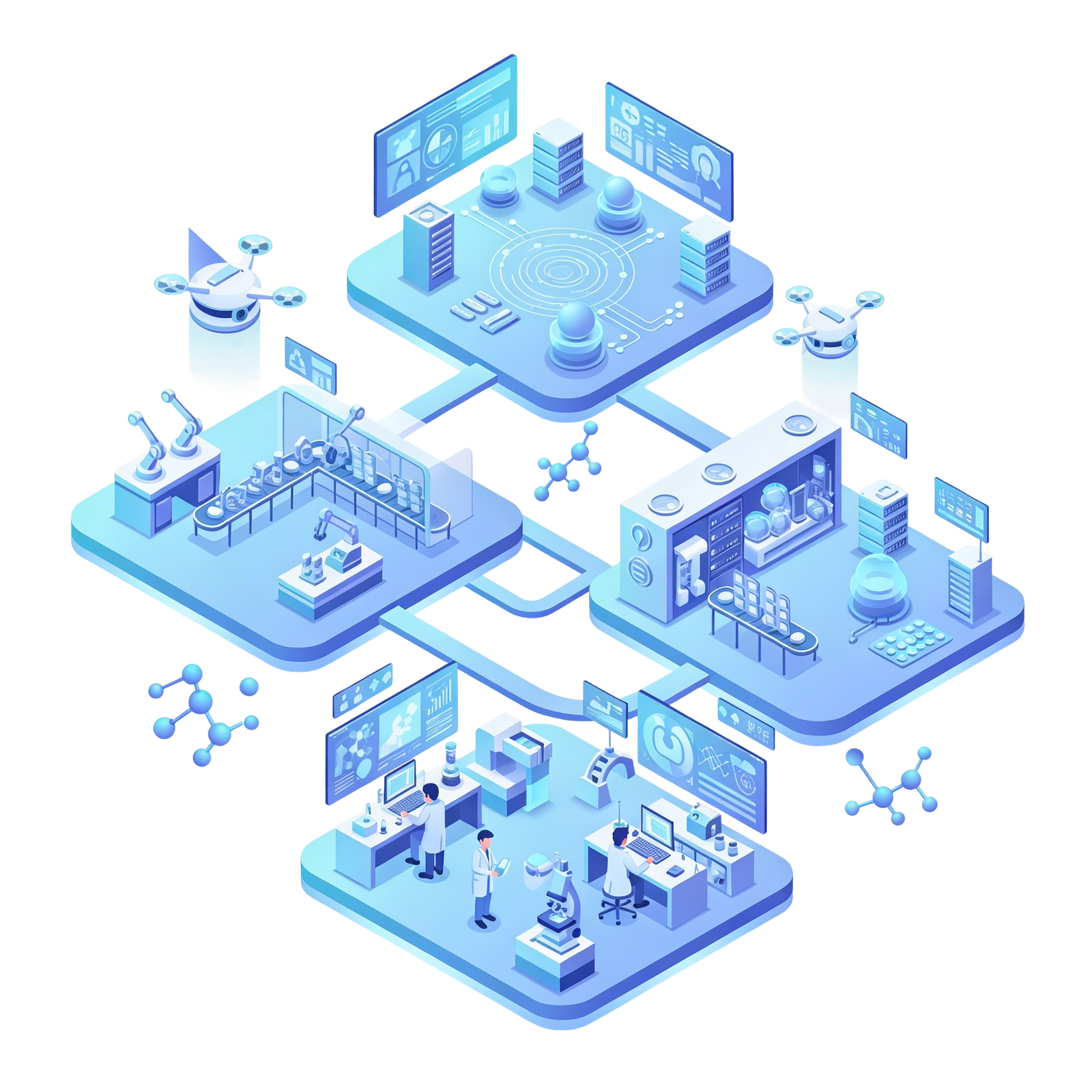
From Real-Time Monitoring to Predictive Optimization — our framework connects lab instruments, manufacturing systems, storage facilities, and distribution networks into a unified intelligence layer.
How the Platform Works
IoT devices collect real-time environmental, operational, and experimental data across labs and production lines. AI models analyze patterns, predict deviations, and automate alerts or corrective actions before costly failures occur.
Our platform integrates seamlessly with LIMS, MES, and ERP systems while maintaining data security and full regulatory compliance.
Accelerate Innovation. Ensure Compliance. Reduce Risk.
Faster drug discovery and research cycles
Improved quality assurance and batch consistency
Reduced equipment downtime and maintenance costs
Enhanced regulatory compliance and audit readiness
Real-time cold chain monitoring and protection
Increased operational efficiency across facilities
Real-World AI & IoT Life Sciences Automation
Four proven scenarios accelerating innovation, quality, and compliance across life sciences operations.
Scenario
Research laboratories require strict environmental controls to maintain experiment integrity and regulatory compliance.
Technologies Used
How It Works
IoT sensors continuously monitor lab conditions, equipment status, and storage units. AI models detect deviations from regulatory thresholds and automatically trigger alerts while generating audit-ready compliance reports.
Measurable Outcomes
Scenario
Pharmaceutical companies face product loss due to temperature deviations during storage and transportation.
Technologies Used
How It Works
IoT devices track temperature, humidity, and location throughout the distribution process. AI analyzes environmental data to predict potential breaches and alerts stakeholders before product integrity is compromised.
Measurable Outcomes
Scenario
Biopharmaceutical production lines experience unexpected equipment failures, causing batch losses and costly downtime.
Technologies Used
How It Works
Sensors collect performance data from manufacturing equipment. AI models analyze patterns to predict mechanical failures before breakdowns occur, enabling proactive maintenance scheduling and zero-disruption production.
Measurable Outcomes
Scenario
Clinical trial management teams struggle with fragmented data, delayed analysis, and protocol adherence challenges.
Technologies Used
How It Works
IoT devices collect patient health metrics in real time during clinical trials. AI systems aggregate and analyze data to identify trends, ensure protocol adherence, and detect anomalies early — accelerating timeline and improving safety.
Measurable Outcomes
Ready to Accelerate Life Sciences Innovation?
Let's build a smarter, more efficient, and compliance-ready future for your organization. We don't just digitize processes — we enable intelligent, compliant, and innovation-driven life sciences ecosystems.
Schedule a Life Sciences Strategy Consultation
Talk to our team about accelerating innovation, compliance, and operational excellence.
Request a Demo
See a live demonstration of our AI-driven lab monitoring and cold chain intelligence platform.
Speak to an AI & IoT Specialist
Get answers from our life sciences AI engineers and regulatory compliance specialists.