Intelligent Healthcare
Powered by AI & IoT
Smarter Clinical Decisions. Better Patient Outcomes.
We help hospitals, clinics, diagnostic centers, and healthcare networks transform patient care through AI-driven insights and IoT-connected infrastructure — enabling real-time monitoring, predictive analytics, and smarter operational efficiency.
Rising Demand, Limited Resources
Increasing patient loads, operational complexity, and cost pressures demand that healthcare providers adopt intelligent, data-driven automation to deliver high-quality care.
Staff Shortages
Growing patient volumes with limited clinical staff lead to burnout and compromised care quality.
Rising Operational Costs
Hospitals face mounting expenses from equipment maintenance, energy usage, and administrative overhead.
Reactive Care Models
Manual and reactive processes delay response to patient deterioration and increase avoidable complications.
Disconnected Systems
Siloed EHRs, monitoring tools, and hospital departments prevent real-time data sharing and visibility.
Delayed Diagnoses
High radiologist workloads and manual review processes increase the risk of missed or delayed diagnoses.
Compliance Complexity
Strict HIPAA, GDPR, and healthcare regulatory requirements demand constant monitoring and audit readiness.
Healthcare organizations must shift from reactive manual processes to predictive, intelligent care ecosystems.
AI + IoT for Connected, Predictive Healthcare
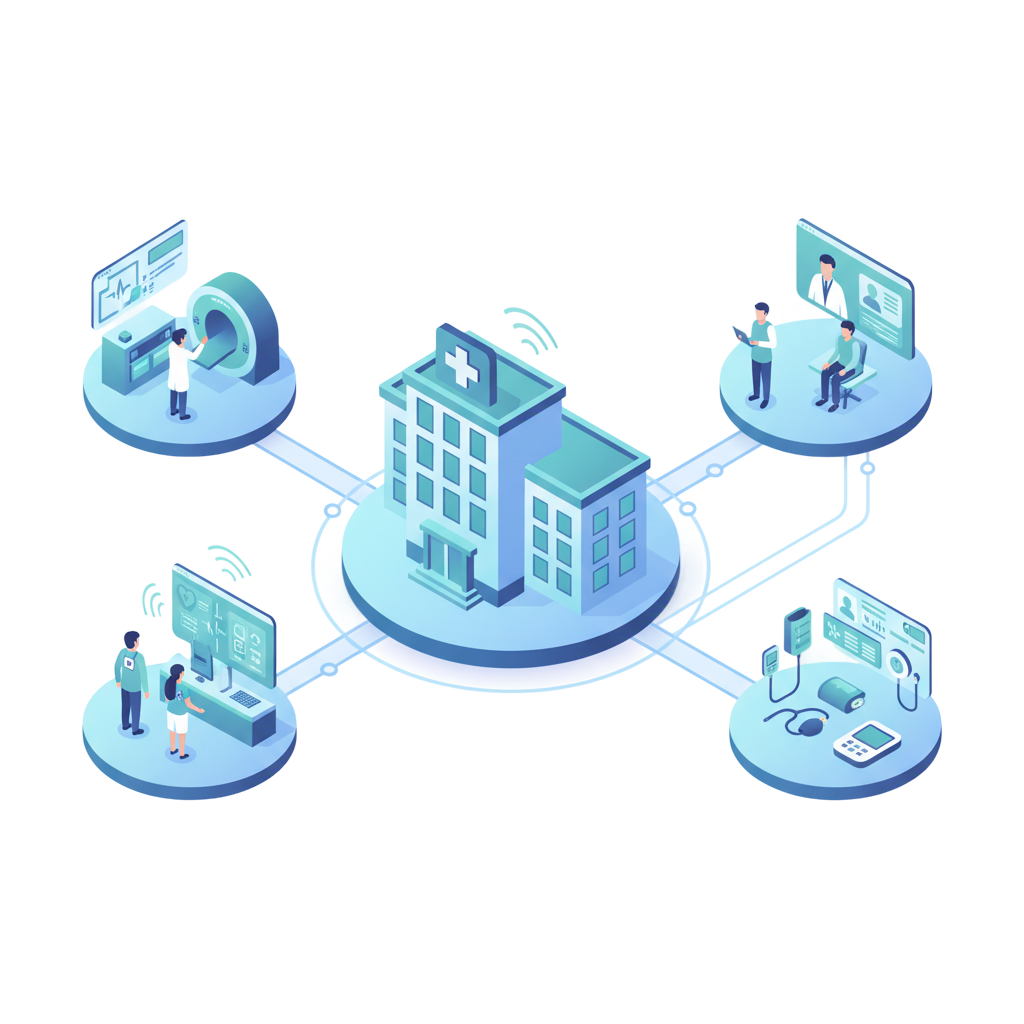
From Real-Time Patient Data to Proactive Care — our platform connects medical devices, patient monitoring systems, hospital equipment, and facility infrastructure into a unified intelligence network.
How the Platform Works
IoT devices capture real-time health and operational data from across the hospital. AI models analyze trends, predict risks, and automate alerts or clinical interventions — enabling proactive care rather than reactive response.
This integration enables proactive patient care, optimized hospital operations, and improved resource allocation at scale.
Smarter Care. Lower Costs. Better Outcomes.
Early detection of patient deterioration
Reduced hospital readmissions
Improved staff efficiency and workload management
Lower operational and equipment maintenance costs
Enhanced patient safety and compliance
Real-time visibility across departments and facilities
Real-World AI & IoT Healthcare Automation
Four proven clinical and operational scenarios where our platform delivers measurable healthcare transformation.
Scenario
Hospitals struggle to monitor high-risk patients continuously, leading to delayed intervention and avoidable complications.
Technologies Used
How It Works
IoT-enabled wearable devices continuously collect vital signs from patients inside or outside the hospital. AI models analyze patterns to detect early signs of deterioration and automatically notify medical staff before critical events occur.
Measurable Outcomes
Scenario
Hospitals lose valuable time locating critical equipment, and unexpected device failures disrupt patient care.
Technologies Used
How It Works
Medical equipment such as ventilators, infusion pumps, and imaging machines are fitted with IoT tracking sensors. AI models monitor usage patterns and performance data to predict maintenance needs and ensure availability.
Measurable Outcomes
Scenario
Radiologists and diagnostic teams face high workloads, increasing the risk of delayed or missed diagnoses.
Technologies Used
How It Works
Medical imaging devices feed data into AI systems that analyze scans for abnormalities such as tumors, fractures, or infections. AI highlights suspicious areas for physician review, speeding up diagnosis and improving accuracy.
Measurable Outcomes
Scenario
Intensive care units require constant monitoring and rapid response to patient condition changes.
Technologies Used
How It Works
IoT monitors continuously collect ICU patient data (heart rate, respiration, blood pressure). AI analyzes patterns and predicts potential complications, automatically escalating high-risk cases to clinicians for immediate action.
Measurable Outcomes
Ready to Transform Healthcare Delivery?
Let's build a smarter, safer, and more efficient healthcare system together. We don't just digitize healthcare — we enable predictive, intelligent care ecosystems.
Schedule a Healthcare AI Consultation
Connect with our healthcare AI team to discuss your clinical and operational challenges.
Request a Live Demo
Experience a live walkthrough of our patient monitoring and hospital automation platform.
Speak to Our Healthcare Technology Experts
Get direct answers from our clinical AI engineers and healthcare systems specialists.